Character Strengths, Well-being in education

New book chapter

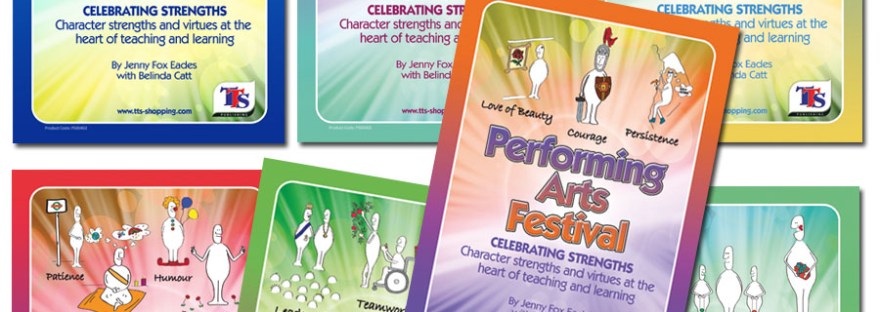
I am very pleased to say that I have just had a chapter published in this new book on positive psychology. It is co-written with Judith Gray, formerly head of Frodingham Infants and details the work we did together on Celebrating Strengths.

Celebrating Strengths combined ideas from positive psychology with psychodynamic theory and theology and philosophy to create what I think was a unique educational philosophy and approach to school life – and Judith was an important part of that process.

Character Strengths, Uncategorized, Well-being in education

Character Strengths in the classroom

A discussion of practical ways to build character strengths and virtues into classroom practice Character strengths and virtues in the classroom – practical suggestions

Character Strengths, Well-being in education

Character strengths and virtues in education – how and why?

In my latest video I talk about how and why you might want to introduce character strengths and virtues in education. There are three main reasons – to help to manage or contain anxiety, to build relationships and to help teachers and students alike to stay hopeful. And I break all the good rules of talks by adding a fourth reason – it gives us a language to discuss – not to impose – ideas of right and wrong and what constitutes a good life.

Well-being in education – character strengths and virtues

Joy in education, Well-being in education

The importance of joy and pleasure in education

Today, I have been working on my PhD. And as a result of my reading and writing today, what is uppermost in my mind is the importance of pleasure – the simple pleasures of teaching, learning, writing, researching – and just living. I feel that pleasure in learning, what Simone Weil called ‘joy in the work’ is in danger of being eclipsed in all the talk of targets, improvements, standards etc.

Weil wrote that the intelligence only grows and bears fruit in joy. If she is right and I think she is, then much of what happens in schools today is not about growing intelligence. If teachers feel no joy in teaching, children are unlikely to feel much joy in learning, and if children don’t feel that joy in learning, that thrill of discovery, that freedom to try and to fail and try again, they will want to leave education as quickly as possible instead of seeing learning as a delight to pursue throughout their lives.

And today, I have felt joy. Joy in standing at my desk (I stand to work, sit down to rest); joy in reviewing the videos of my conversations with colleagues and pupils. Joy in the fact that I have the time and the energy and the mental space to write a PhD. Joy in the sunshine of a spring day in my study.

Interestingly, this joy does not preclude struggle or discomfort. I struggle to express my ideas clearly, feel anxiety about whether my work is of the required standard, get frustrated at trying to sort out a muddle of an over-long chapter into two tight, well-argued and interesting ones. There is dis-comfort in learning, too and it can sit, strangely enough, alongside the joy, even deepening it.

And what about the simple joys of standing, sitting, breathing, looking that my training as an Alexander Technique teacher has opened my eyes to? Those are there in the classroom too – but mostly, we’re too worried about targets and goals to notice. And that seems really rather sad. So now, I will end a day’s reflections with the joy of a walk in the sunshine. And, if you read this, I wish you a drop of joy too.

Weil, Simone. (1959) Reflections on the right use of school studies with a view to the love of God London: Fontana Books


Character Strengths, Storytelling, Well-being in education

Character strengths in action: Using your whole body to tell a story

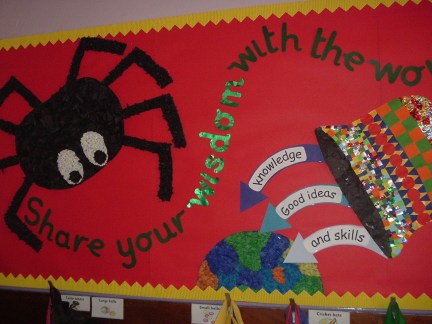
You can, and I do, often use simple props to tell a story. You can also use your body. A mixture of tai chi moves, with signs from British Sign Language help me, as the storyteller, to embody the story. Because I am using my whole body, I am fully present, aware of where I am, my audience and my whole self as I tell the story. It is less a cognitive and verbal activity, than a way of inhabiting the story and drawing my listeners into the story with me.

I demonstrate this method of storytelling here

A retelling of Anansi and the Pot of Wisdom, using BSL signs and tai chi moves to enhance the storytelling

As well as the character strength of #wisdom, students see many other strengths in this story, including #humour, #persistence, #teamwork and #spirituality.

Here’s a picture from Frodingham Infants that is based on the story,

Frodingham Infant School Scunthorpe UK


I hope you enjoy it 🙂


Character Strengths, Well-being in education

Three ways to develop character strengths and promote educational well-being

In these blogs and the videos that accompany them I am sharing with you what I have learned from 12 years of working in schools supporting the well-being of teachers and students.

The blogs and videos are meant either as a stand alone training resource or as a supplement to my published resources and my story videos.

In an earlier film, I talked about how I have put stories and storytelling at the heart of my well-being work in schools – precisely because a good story well told promotes the well-being of both teachers and students, An introduction to my well-being in education videos.

Now I want to talk about another theme, that of paying attention to character strengths and virtues.

I first came across the idea of character strengths in the work of Martin Seligman and the VIA or Values in Action character strengths and virtues. You can find more about this approach at the VIA Institute .

Of course the association of character strengths with education is much older and dates back to Aristotle. Aristotle linked happiness with the use of character strengths and virtues. And he said that children learn about qualities like courage and honesty in three ways

  1. seeing them used by role models
  2. thinking and reasoning about them
  3. using them for themselves

So we learn what courage is by being brave.

In my work, I’ve tried to draw on those three ways of learning.

Firstly, I’ve encouraged teachers to tell stories that show characters or historical figures using – or failing to use – qualities like love or friendship or enthusiasm. I might tell a story like Anansi and the Pot of Wisdom or Where is the Moon or the Three Little Pigs and then ask, what strengths did you see in that story? Where? I might also ask, were there character strengths that SHOULD have been used but weren’t?

In this way, children and teachers engage in a thoughtful – and educational activity – and at the same time begin to build up a picture of what the strengths look like in action and to listen for, look for the strengths, to spot them both in stories and then in other people and finally in themselves. Using character strengths for yourself, seeing them in others, thinking about them, builds positive relationships in the classroom and creates an atmosphere that enhances learning and supports well-being.

To develop Aristotle’s idea that we learn about character strengths and virtues through reason, I have used Philosophy for Children or P4C and taken either a story or a single word like creativity or courage as a stimulus for discussion. If you don’t know about philosophy for children there are resources and training available and the more I use it the more powerful a teaching tool I think it is. Again, a philosophy session is a very educational activity – we’re not trying to be therapists, we are encouraging intellectual rigour, depth of thinking and discussion. At the same time you as a class are building your understanding of what a particular character strength means in this group and in this community, now. It’s not what the ‘experts’ say about courage that really matters – it’s what it means in your school, your family, now that is important.

Finally, the third way of learning about character strengths that I have used in education is to create a concept of Strengths Builders – ideas and classroom exercises that deliberately set out to let you use and therefore build a particular strength. So, for example, if you want to focus on building the strength of curiosity for yourself or your class, you might set a challenge trying a single new food you have never tasted in the week ahead, or of watching a television programme or film you haven’t seen before – or of reading and even learning by heart a poem by a poet you have never read. You set out deliberately to pay attention to – and build – a particular strength. Then, if everyone in the class has done this activity – you can share and reflect on your experiences.

The shared experience – and the way that you are all paying attention to the same thing – curiosity – is part of what builds community. I will say more about community building in a future video.

If you want lots of ideas for building character strengths you can find them in my Character Strengths Ideas Box Character Strengths Ideas Box or in Character Strengths for Circle Time.


character strengths activity box tts

You can find a high school programme that contains strengths builders for all the VIA Strengths here Strengths Gym – a high school programme of strengths builders and stories for 11 to 14 years

Equally, you can think up your own.

Have fun.

Storytelling, Well-being in education

Stories and storytelling for teacher and student well-being

Educational well-being – practical ideas for supporting teacher and student well-being

1. Stories and storytelling for teacher and student well-being

This is the first in a series of blogs and videos which are intended to share with you the fruits of 12 years of working to support teacher and student well-being in education – through a focus on character strengths and virtues, stories and storytelling and the creation and celebration of rhythm and traditions in the classroom.

I will be telling my stories and sharing ideas and suggestions. If you enjoy these resources, please let me know!

The first of a number of films will follow shortly 🙂

Why become a storyteller?

Storytelling is an ancient and highly effective teaching technique and ANYONE can learn to tell stories. The world’s greatest teachers all told stories to convey their essential messages. Storytelling engages the whole selfthe emotional as well as the rational self – even the physical self (a good story gives us ‘goose bumps’ or makes us shiver), so stories are far more memorable than a series of statements or a list of facts. Telling stories allows us to make an emotional connection with our audience because storytelling is mind to mind, face to face and heart to heart.

Psychologist Dan McAdams says ‘We are all tellers of tales…each of us comes to know who he or she is by creating a heroic story of the self’, (McAdams, 1993, p. 11). Philosopher Alasdair MacIntyre, says that ‘the telling of stories has a key part in educating us into the virtues’ and that without stories, children are ‘unscripted, anxious stutterers in their actions as in their words’ (MacIntyre, 1981, p. 216). Bettelheim regarded fairy tales as essential to children’s healthy emotional development, (Bettelheim, 1976).

Storytelling allows a teacher to be playful, to model creativity for their pupils, to nurture them and introduce them to the stories of their own culture and those of others. It is an opportunity for a teacher to show their pupils something of their authentic self.

Storytelling is perhaps our oldest art form and has been used in all societies to pass on values and wisdom to the next generation. Children never forget a teacher who tells them stories. The stories you tell children are the most lasting gift you will ever give as a teacher.

Storytelling stimulates the imagination more than the reading of books or the watching of films – because it leaves more for the child to fill in. Stories that are told are remembered better than those that are read aloud. This is probably due to a combination of their greater emotional impact and the fact that oral stories tend to be shorter and use strategies to engage memory – rhyme, rhythm and repetition.

Storytelling helps children become comfortable with silence and stillness.

Telling stories increases your own ability to hold children’s attention and enhances your creativity.

Finally, storytelling is immensely enjoyable – for the storyteller!

How to get going as a storyteller

First, tell stories you love. Your enthusiasm and pleasure in the story is mostly what children will remember. The fact that you tell it with passion is much more important than how fluent or skilful you are.

So, start either with a favourite story of your own or choose one from my published resources. The ones in my books are already written very simply, and are designed to be told aloud. Read them through a few times then put the book down and practice in a room, all by yourself. Practice IS important.

PS00511_small

In particular, make sure you know the first and last line by heart. This is important. Then, learn by heart any memorable phrases that are repeated through the story. There are usually a few of these.

Then, let the children know you have never told this story, or even told any story before. This gets them on your side. Then, have a go. And remember, Rule 1 of storytelling: Enjoy it.

Don’t worry if you miss bits out, slip up on words, get stuck and have to start again. Storytelling is a skill, you get better with practice.

If you want to tell a particular story that is not available in the TTS resources, find a few versions in books or on the internet and read them all through. Then put them all away and write your own version as simply as possible.

Rule 2 of storytelling: Keep it Simple.

A good template for creating a good story to tell aloud is The Three Little Pigs. Simple structure, memorable phrases with alliteration, lots of repetition. Most people could tell this story with no practice at all. It is a really good example of a memorable, oral story. All the stories I write to be told aloud are really The Three Little Pigs in disguise!

Rule 3 of storytelling:  If you can see it in your imagination, your listeners will see it in theirs.

When you tell the story, make sure you are seeing it in your mind’s eye. Picture it as clearly as you can.

Rule 4 of storytelling:  Tell the Same Story As Often as Possible.

Tell the story again as soon as possible, either to your class or to another class. In the Waldorf education system in Scandinavia children hear the same story told every evening, by firelight, throughout the week. This allows them to get to know the story really well and for the teacher to get to know it too, so that it really enters their repertoire. And children enjoy repetition – look at how often they watch a favourite DVD or play a favourite game. Novelty is good – so is repetition and familiarity.

When to tell stories

Storytelling has an obvious association with literacy and with speaking and listening. However, you can tell stories in any subject discipline. I knew a maths advisor once who used The Three Billy Goats Gruff to great effect to help teach measurement. She took the class outside to take little steps across the ‘bridge’, counting how many were needed to get across; then they took bigger steps and counted how many of those were needed and so on. She used Coronation Street, Brookside and East Enders to teach place value to high school students, too.

So, don’t feel limited to literacy lessons to tell stories. And don’t forget that older students like stories, too.

My retelling of a traditional Lincolnshire story, Where is the Moon?

Character Strengths, Well-being in education

Character Strengths – The Ingredients of Resilience

What is resilience?

This morning I worked with an Australian colleague putting together a workshop for the Practicing Positive Education Conference at Knox Grammar School in August.

In Australia, positive education, education for academic achievement and well-being, has been growing as a theme – or philosophy – of education for some years. Resilience is one of the core ideas at the heart of positive education and an important one. But what is resilience? How do you encourage it? Can you teach it?

A head teacher who has worked with positive education in the UK for 8 years now told me recently what she thought the ingredients of resilience actually are. She called it ‘an inner strength’ that gets you through times of difficulty or struggle.

We build resilience, she said, through identifying our strengths of character and learning to use them in different situations, learning to use them wisely. Over the next few weeks I am going to share some of her wisdom along with my suggestions for how you might apply it in your own context.

The Ingredients of Resilience

Ingredient 1: Open-mindedness

One of the things that undermines resilience most is jumping to conclusions:

  • ‘I can’t do this’
  • ‘this is too much for me’
  • ‘nobody cares’
  • ‘life is completely dreadful’

Open-mindedness is the antidote to jumping to conclusions because it helps us to withhold an immediate snap judgement and look again, more clearly, more thoughtfully. Open-mindedness looks at different sides of a situation, or a person, and is willing to change its mind in the face of evidence or persuasion.

Open-mindedness says

  • ‘I might be able to do this with the right tools’
  • ‘Perhaps I do have the strength to cope with this’
  • ‘I do have friends and people who care’
  • ‘life might be difficult but it’s not ALL bad’

Essentially, open-mindedness sees clearly and most situations and most people are a bit of a mixture!

So, open-mindedness in action:

  • listening to other opinions
  • finding out about different people
  • finding out about different cultures
  • looking for, and enjoying, similarities and differences

What can we do to encourage open-mindedness in our classrooms?

Firstly, try to practise it ourselves. Children and young people learn most by example. Think about how often YOU jump to conclusions or make snap judgements and challenge yourself to think again.

Then you could try this ‘Strengths Builder’ to encourage an awareness of how people think, believe and act differently.

A Strengths Builder for open-mindedness: Same or Different?

The sign from British Sign Language for ‘the same’ is both index fingers placed together. The sign for ‘different’ is the same two fingers placed together and then moved apart. Teach this to the students first.

Younger students can do this activity in pairs. They need to talk with their partner and find some way they are the same and some way they are different. Then they share this with the class. When a few pairs have had a chance to share, everyone moves around and finds a new partner and the process is repeated.

You could follow up with a class display of ‘Similarities’ and ‘Differences’.

Older students can work in bigger groups and make lists of the ways their group is similar or different.

(This activity is taken from Character Strengths Activity Ideas Box

http://www.tts-group.co.uk/shops/tts/Range/Search?search=character%20strengths)

Character Strengths, Well-being in education

Character Strengths in schools: friendship and storytelling, mental health and well-being

Over the past few weeks it has been my pleasure to pay 3 visits to a lovely primary school called #Thomas Gray in #Bootle.

I have been working to introduce staff and pupils to the ideas of thinking and talking about #character strengths, telling stories together, and celebrating what’s good in life on a regular basis.

In the face of increasing concerns about child and adolescent #mental health, schools like Thomas Gray  are working hard to make sure that they create a school environment that supports the development of positive mental health, also referred to as well-being or resilience. And thinking about your character strengths – and how you can use them to make the world a better place – is an important part of that process.

The children are not really encouraged to think about how their use of character strengths can make themselves happier – though this will probably happen. Rather, they are encouraged to think about how using them can help others and enrich their classroom and their school, how their strengths can contribute to their community. Children, in my experience, like thinking about ‘character strengths and virtues’ – and engaging in deep philosophical discussions about them – because children are intensely ethical and often altruistic people, who want to save the world and think about others.

We see growing signs of emotional distress in young people today, as shown by the growth in self-harming. I suspect one of the many factors that may contribute to this is what academics call ‘individualisation’ or the ‘turn to self’. If me and my happiness and what I look like and me owning stuff and having stuff are all that matter, life is actually rather barren. And if I am not ‘happy’ after all, what use is life at all?

In a tiny way, thinking together about #friendship, #love and #kindness, as we have been doing together at Thomas Gray, and telling the story of The Elephant and His Mother and St Werburga, are our way of saying to ourselves and to the children, ‘there is more to life than ipads and ipods’ and more to education than exams and league tables and more to well-being than money. Other people matter, you matter because you are valuable – not for what you earn or will earn or possess but because you are an extraordinary human being NOW and you CAN and DO make the world a better place and you CAN and WILL do so in the future.

We hope we are laying the foundations, with these primary school children, for resilience and well-being in later life. And I suspect that real well-being has more to do with being able to forget about yourself than it has with spending your whole time thinking about ‘you’.

The Elephant and His Mother and the story of St Werburga (my retelling is called ‘One of my geese is missing) can be found here:

PS00511_small

Character Strengths, Well-being in education

Character Strengths in Education: Friendship

When did school become so competitive? Competition is fine, but I’d rather keep it to the sport’s field or the Monopoly Board. Academic endeavour, I think, is the wrong place to compete. We learn best when we learn from and with one another. A head teacher of an international school in Geneva, who had previously led a prestigious girls’ private school in the UK, commented in the press recently that in Geneva pupils were less competitive and were treated with more respect than in the UK.

American educator Marva Collins has some views on education I don’t necessarily agree with.  However, what I LOVED in her approach was the way that she got ALL her pupils working as a team. Success was something everybody celebrated and if you’d finished your work or found something easy, you helped somebody else.

SO…..after half term I’m off to Bootle, to the wonderful Thomas Gray Primary, to focus on storytelling, as always, and on the #character strength of #friendship. I’ll be telling a Buddhist tale, The Elephant and His Mother, which you can find here

Featured image

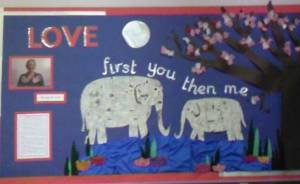
And here is a great picture from #Frodingham Infant School of the same story

Featured image

I’ll also tell one based on a beautiful book by Jane Yolen, Rainbow Rider.

My version is here

Featured image

We will talk about, think about, be silent together and reflect on #friendship. And if I can, I’ll post videos here soon of the stories I tell.

Watch this space.

Yolen, J. 1975 Rainbow Rider, London: Collins

Collins, M & Tamarkin, C. 1982 Marva Collins’ Way, New York: Penguin Putnam Inc