Character Strengths, Storytelling, Well-being in education

A day in the life of a head teacher using her strengths to support her own well-being and that of her students

Yesterday I had the privilege of working with 30 wonderful head teachers from Merton, on strengths based leadership and well-being.

One of the highlights of the day was listing to the the story told by Celia Dawson, head teacher of Cricket Green http://www.cricketgreen.merton.sch.uk/.

Celia told us the story of Project Search http://www.cricketgreen.merton.sch.uk/project-search/4578432848

Project SEARCH changes the way people think as it challenges ideas about what        people with a learning disability can do. It raises expectations of employability and the general public can see people with a learning disability hard at work as part of    everyday life.

Only 7% of people with learning disabilities nationally are in any form of paid work, compared with 74% of the wider population. However, many of Cricket Green’s trainees are now in meaningful employment within a local hospital and externally.

We used the #strengths circle reflection tool which I have developed in the course of my work to identify the many strengths that we felt Celia had used to get this important project off the ground. It was, for me, a humbling and inspiring experience. Thank you Celia!


Character Strengths, Spirituality, The Calm Classroom, Well-being in education

Well-being and character strengths and virtues

A language for being well in education

Next week I will be speaking to 30 head teachers from Merton about the well-being work in schools on which my PhD was based and which I have written about in books and teachers’ resources.

An important strand of that work is a focus on character strengths and virtues. You can hear me talking about this strand of my work on  You Tube

What are character strengths?

Every religion and every philosophical tradition has a concept of virtue, a way of thinking, feeling and acting that is morally valued or good. And as far back as Aristotle, education has been concerned with character and with morality or goodness, teaching children to understand right and wrong, as well as with knowledge. Aristotle saw the virtues as necessary to a flourishing life or happiness.

More recently, psychologists have linked the use of character strengths and virtues with well-being, vitality and a sense of fulfillment. Psychologists Martin Seligman and Chris Peterson (Peterson & Seligman, 2004) say that there are 6 universally valued virtues

  • Wisdom and knowledge
  • Courage
  • Love and humanity
  • Justice
  • Temperance
  • Spirituality and transcendence

They describe character strengths, like creativity, hope, gratitude, kindness, as the traits that allow us to display these virtues and say that

  • They are valued in almost every culture
  • They are valued for themselves, not as a means to other ends
  • They can be developed
  • They are influenced by our environment, some settings lend themselves to the development of strengths whereas others preclude them

Seligman and Peterson list 24 character strengths, under the headings of the six virtues. I have used this list for 15 years in my work in schools and in my PhD on well-being in education. I kept most of the names of the character strengths but changed the virtue headings to strengths of the head, action, heart, community, self-control and meaning.  I have added a single strength, patience, which is essential to teaching and learning. I have written a simple definition for each strength. I also dropped ‘social and emotional intelligence’ and replaced it with the Aristotelian virtue of friendship.

Some questions for educators to think about:

Is it better to focus on strengths or weaknesses? Always? Sometimes? Never? If sometimes, when?

Do you think there is anything missing from this list?

You can find out more about the classification of strengths that my work is based on  here:  VIA Character Strengths

Tool: A Strengths Prompt

Strengths of the Head

Creativity: thinking a little bit differently                                 

Curiosity: wanting to find out

Love of learning: enjoying, learning new things

Open-mindedness: enjoying difference, open to different people and ideas

Wisdom: understanding what is really important in life

Strengths of Action

Enthusiasm: eager and full of energy, raring to go

Persistence: Sticking at things, not giving up

Couragedoing the right thing even when we feel scared l

Honesty: telling the truth, being an open, straight forward person

Strengths of Community

Fairness: treating everyone equally

Teamwork: pulling together, working well with others

Leadership: Helping or guiding other people to do something good and to get on well

 Strengths of the Heart

Love: caring deeply and showing we care by thoughts, words and deeds

Kindness: Doing and saying things to make people happy

Friendship: being gentle with ourselves and loyal and kind to other people

Strengths of Meaning

Gratitude: being thankful for good things, saying thank you

Spirituality: thinking deeply about God, love or the meaning of life

Humour: Seeing the funny side of life and making others smile or laugh

Hope: trusting that good things will happen

Love of beauty: noticing and enjoying good or beautiful things

Strengths of Self-control

Forgiveness: letting go of hurt and anger and wishing other people well again 

Prudence: making good choices that effect our future

Self-control: controlling thoughts, emotions and actions so we live well and achieve our goals

Modesty: a true knowledge of our own strengths and weaknesses

Patience: Letting things take the time that they take


Weekly Group Plans

Walk softly, tread lightly

Next week is week seven of our current ten week Alexander Technique course and we are going to be thinking about our feet, and about how we walk – and about walking softly, lightly on the earth. The converse is fairly obviously something we don’t want to do – we don’t want to walk heavily, stiffly, we don’t want our legs or feet to feel hard or immobile. We don’t want to strut, to stamp, to stalk – well, most of us don’t. We DO want to walk easily, gently, with enjoyment, with grace and beauty, even.

And one of the activities we will try is exactly that, thinking first of how we DON’T want to walk and then looking at the opposites, to find positive ideas, positive images to think of while we walk. In the Alexander technique, this kind of thinking is called direction.

We might also work at waking up the foot, walking over different surfaces, rubbing and flexing our feet gently, with kindness. And we will look at the wonderful image of the foot in Albinus on Anatomy by Hale and Coyle.

We may work on standing in a lunge, exploring rocking and shifting our weight back and forward, observing pictures of people in the lunge position, and playing a game I call, ‘Make like a stork’! You will have to come along to find out more!

And we will read some of Bruce Fertman’s post on  Walking.

And then we will softly, lightly, with joy, walk out into the week ahead…….

feet

Weekly Group Plans

‘Going Deeper’ – hands like silk

‘Hands like silk’ is the image and focus for the first week of ‘Going Deeper’. A soft hand is sometimes the key to a soft, poised, responsive body. If your hand is soft it is actually quite hard to maintain a lot of tension anywhere else.

So, one thing we will do this week is to warm up our hands. To stroke them, one at a time, turning one hand ‘off’ and leaving the other ‘on’. The ‘on’ hand strokes the ‘off’ hand and then vice versa.

You might then think of turning the hand up just a little, say to tension level of 2, where 0 is asleep and 10 is a clenched fist level of tension, and with a soft but awake hand, wash your face. Then with just two soft fingers, try taping your lower jaw and up over the skull. Explore the back of the skull, where it meets the spine. Stroke soft hands around your throat and neck and shoulders. Pause, breathe, notice how you feel.

Another exercise is simply to touch each finger tip in turn, moving it gently from the tip outwards. Then gently interlace your fingers and let one hand rotate the other hand and then swap.

Having woken up our hand we might then go for a ‘sensing’ walk. We put our awareness into our feet and let our feet take us to some point or object in the room that interests us, then we take our awareness into our hands and explore an object or surface with ‘exploratory’ hands or ‘mouse’ hands – delicate, curious. Then we pause and move on. I am indebted to one of my teachers,  Bruce Fertman,for this exercise and for ‘mouse hands’ 🙂

For teachers, one important point in working in groups is to allow enough time after each exercise to reflect on our learning, to let our learning ‘sink into’ our minds and bodies. Don’t do too much, too quickly.

Another exercise we might do this week is just to look at hands in pictures – noticing how tense or soft or beautiful they are. Learning to observe in others, in this way, increases our powers of observation in ourselves, too.

Finally, we might think of letting an object open our hand rather than our hand opening to grasp an object. Try this on your leg,. Sit down and let your hand, in an off position, slightly curled, relaxed, rest on your leg., with the back of the hand touching the leg. Then turn the hand over and slowly pull your elbow back, letting your hand slide back over your leg so that your hand molds itself to the shape of your leg.

Try it with a large ball or other object. Rest the back of your hand on the object – it could be a mug or something else with soft contours – then turn your hand and let it slide itself around the object. Notice the difference between this way of making contact with an object and the usual ‘grip’ ‘grab’ ‘grasp’ approach most of us adopt most of the time.

To reinforce your learning, watch a video of a Japanese Tea Ceremonyand pay attention to how quietly and precisely the practitioner uses their hands – and notice how quiet the hand that is NOT moving is. Often, even when not active, our ‘off’ hand can be very tense. hands like silk

Weekly Group Plans

How I work in groups – a way of thinking and planning

The joy and the challenge of teaching and studying the Alexander Technique in groups is, of course, that everybody is at a different place in their learning but that you need a topic, a theme, an activity, that everyone can relate to and benefit from thinking about.

And I work with more than one group – and each group is different! So, the way I am working at the moment is to look at each half term as a whole – that is five weeks of study, with each group lasting two hours – and I plan an overall theme for that half term with a slightly different focus for each week. Then, the specific content of each group will differ, depending on the personalities and experience and wishes of the members of the group- and probably my mood and the weather! But the overarching theme will be constant.

Last half term I took the theme of ‘making friends’ – with each other, with standing, with walking, with sitting…and we played and studied and talked within that theme. This half term I am thinking of ‘Going Deeper’ and we will be looking in more detail at hands and how we touch, feet and how we walk, arms and how we lift or carry or stretch up and down….And I will write up those workshops here as I plan them – for any of my group members who would like to refer to them, for any Alexander Teachers who wonder how they might work in groups – and for any passing dinosaurs who wonder why all my group members talk about dinosaur tails 🙂

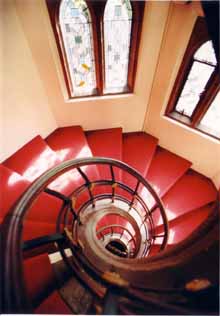
spiral stair girton

Reflections on Previous Groups

Deeply flattered Am I….

Here is a poem by one of my extraordinarily talented students! Thank you Martyn Potts 🙂

#AT* @ UC

 Mind-forged chains around your head?

Too stiff to get out of bed?

Back-ache, neck-ache. Is this you?

This is what you have to do . . . .


Lose the habits that cause pain,

Come to AT and you’ll gain,

Some Zen, some real tranquility,

Ease of posture, a NEW ME.


It’s for him and it’s for her,

For any age, we don’t prefer.

AT has an open mind,

So, try it and you just might find


Your aches and pains soon dissipate,

Every Tuesday, don’t be late.

Ask for Jenny, female Yoda.

Not Pilates, not like Yoga.


Well-being and the Alexander Technique

New Year’s Resolution – stop exercising, improve your well-being!

Yes, seriously.

To explain…..

I have recently been introduced to the work of  Ido Portal , inventor of  The Movement Culture. His basic idea is that we don’t move enough. And when we do move we ‘exercise’ within a fairly narrow range of movements and then, because we only do one sport, we injure ourselves by overspecializing.

As an Alexander Technique teacher I love watching his videos – his movement is beautifully. But I also love that he has developed a philosophy of movement which I find very compelling. Basically he says move more, in more ways. Be less of a specialists, more of a generalist. Humans are designed to move in many, many ways.

And I could not agree more. Children naturally move through a wide range. When out walking they also skip, jump, run, climb, swing, lean down, reach up, clamber, slide. As we age we narrow this range of movement – we just walk, on one level, at one speed.

And the modern world, with it’s ‘labour saving devices’ contrives to save us from moving even more. Cars mean we don’t walk, lifts mean we don’t climb stairs, remote controls mean we don’t even get up to change television channel. We hire a cleaner to clean our windows and our house, we get a dog walker to walk the dog. And then we go to the gym, or yoga class to ‘exercise’ the body we have stopped moving.

Perhaps the problem is the word ‘exercise’. Exercise seems to be a chore, a duty, more about health than about pleasure. If we stopped thinking of ‘exercise’ and instead thought of ‘how can I move more today?’ How can I enjoy movement more? Not, how can I reduce my movement, ‘save’ time and energy, but how can I treasure every opportunity to move my incredible body?

So, a New Year’s Resolution – exercise less and move more. Find movement classes, enjoy moving. Oh and consider learning the Alexander Technique to refine your movement and make it even more enjoyable, easy, free – beautiful, even. Happy New Year everyone.


Prayer, Silence and stillness, Spirituality, Well-being and the Alexander Technique

Be Still and wait: prayer, the body and the Alexander Technique – reflections on a workshop

What I LOVE about teaching the Alexander technique in groups and workshops are the WONDERFUL people who rock up to them! AND how much I learn. And last Saturday’s workshop, Be Still and Wait: Prayer, the body and the Alexander Technique, was no exception.

A few were people I knew already – including my husband who was an extraordinarily kind, unobtrusive, supportive gofer. Mostly, they were people I didn’t know – from Manchester, from Whaley Bridge, from Wildboarclough.

I was nervous. I hadn’t run a workshop on prayer and the AT before. But mostly I was thrilled that people had come to explore and to be open – and above all to PLAY – with these most important topics. And I opened by saying that I am not an expert on either the Alexander technique nor prayer. But I am a student of both and that I was grateful for fellow students to study with.

And my first question could have generated another workshop just on its own. What, I asked, does the Alexander Technique mean to you now, in one word or short phrase? And what does prayer mean to you now, in one word or phrase?

And they said, after time for thought and discussion, that the Alexander technique means……openness, friendship, skeletons (!), balance, rootedness, awareness, posture, environment, connection, self-awareness, embodiment, harmony, alignment, poise, possibility.

Honestly, I was in awe of those responses! From people with a very little, or in some cases no, previous experience of the technique. Those who are relatively new to a discipline sometimes see it with a freshness and clarity that those who have studied for longer can miss.

And they said that prayer means ……silence, stillness, deep silence, laughter, connection, alignment, comfort, openness, harmony, uncertainty, conversation with God, environment, spiritual awareness, spiritual connection, balance, and friendship.

And we looked at our lists with some amazement, all struck by the overlap, the similarities and connections between them. And I COULD have asked – are there any words or phrases from either list that could NOT go on the other? But we had sat and talked long enough and I wanted them up and moving 🙂

So I will save that question for another workshop.

So what did we do then? Well, we did some contemplative anatomy, something I have learned from one of MY teachers, Bruce Fertman, Peaceful Body School. We looked at the fact that we have, not two arms but one arm structure and at how wide and spacious that arm structure is. And then, in threes and in silence, we made bread, softly, creatively, with love and gentleness and awareness of that spacious arm structure. It baked while we ate lunch, filling the space with a wonderful aroma and waking up the sense of smell as our morning activities had woken up our senses of touch, sight, hearing, kinaesthesia and proprioception.

IMG_20181210_172944

And I read, after lunch, from a book by Kabir Helminski Living Presence: A Sufi Way to Mindfulness and the Essential Self. And we engaged in patient, waiting, open listening and discussion. And we went for a walk, channeling our inner dinosaurs because the room was quite chilly by that time. And then we gave one another bread, the bread that we had made with love and attention and openness.

And we used our senses of touch and sight and kinaesthesia and proprioception to explore and choose and add a Christmas decoration to the Christmas tree in the church we were meeting in.

And then we said our goodbyes and said what we were taking away from our four hours together, four hours of playful exploration of the Alexander technique and prayer. And mostly what I take away is a memory of how beautiful humans are, how kind, how generous, how thoughtful, how funny. We are not all like that all the time. But we all CAN be like that, some of the time. And that, in this season of Advent, of waiting, gives me hope.
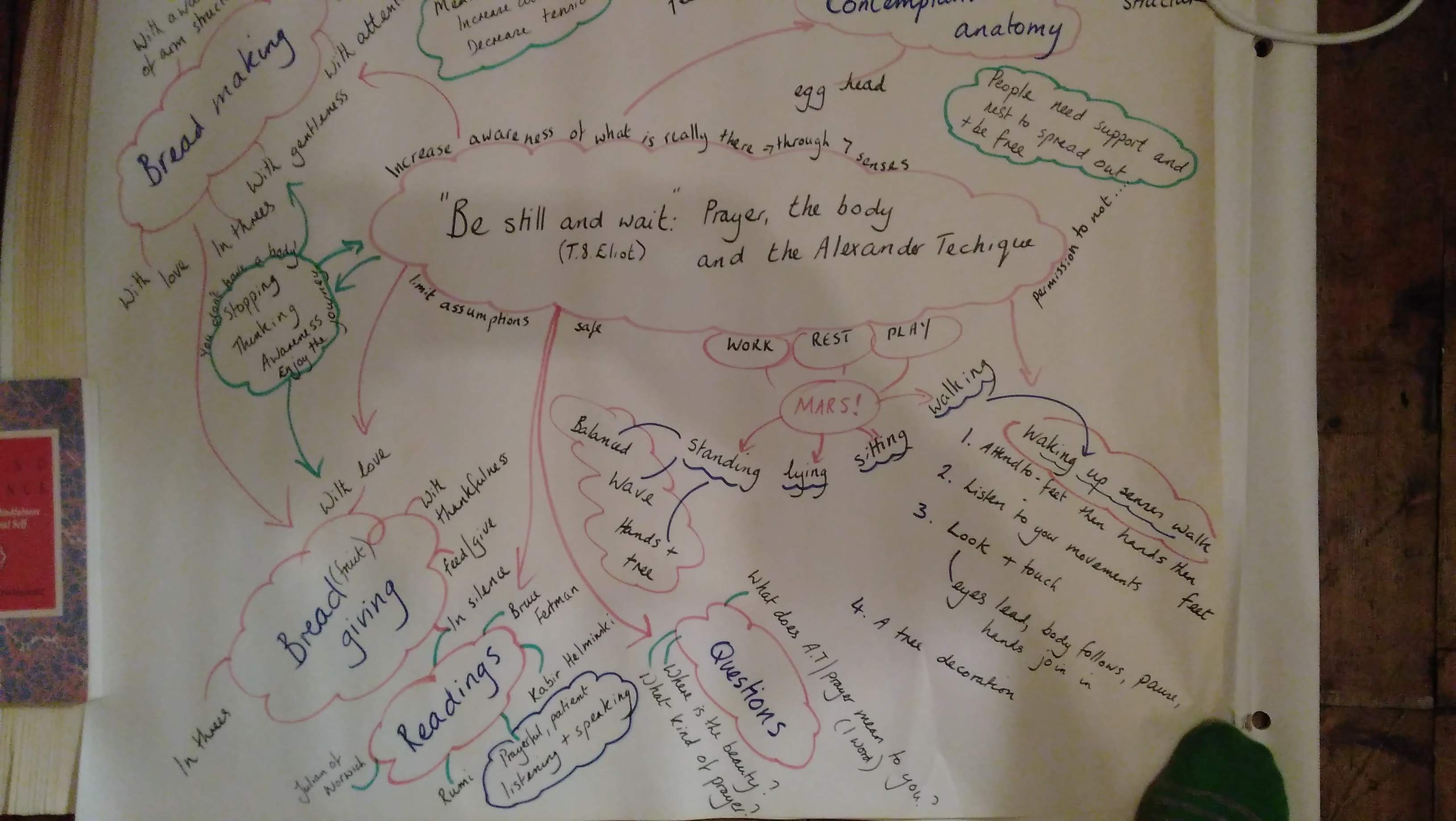
IMG_20181210_173235

My workshop plan – a playful plan for a playful workshop. And no, for students who know me well, we DIDN’T get through a fraction of it!


Character Strengths, Prayer, Spirituality, Storytelling

St Francis, a failure and a friendship

We think of Francis as a saint. But Francis didn’t think of himself that way, I suspect saints never do. Francis saw himself as a failure and this story is the story of one of those failures. It is a story set nearly 800 years ago, in fact it will be 800 years next year. It is the story of how Francis tried and failed to stop a war.

The war was the 5th Crusade. It is worth remembering that Christians have not always been people of peace. The 5th crusade was a crusade by Christians, against Jews, Muslims and heretics and it was breaking Francis’ heart. Francis had once been a soldier, he knew what violence was and he knew what it was to be a prisoner of war. But when Francis fell in love with the Risen Christ, he fell out of love with everything that puts barriers between people, the barriers of pride, power and wealth.

And in 1219 pride and power and wealth had already killed many people. To try and end the bloodshed, Francis went first to the Christians, begging Cardinal Pelagius, the Christian commander, to end the fighting. Pelagius refused.

So then Francis, and his friend Brother Illuminatus, went to the enemy instead, to the Muslim army against whom the Christians were fighting. They went to stop the war and they went to try and change the hearts of the enemy so that they would follow the Risen Christ.

And they walked, the two of them, unarmed, through the camps of that enemy. They were captured and they were beaten. They were taken, finally, to the Muslim commander, the leader of their enemy, to Sultan Malik-al-Kamil of Egypt, an enemy leader who had offered a gold piece for the head of every Christian. And when Francis was led into the Sultan’s tent he said ‘May the Lord give you peace’. It is said that the Sultan was startled to hear a greeting so close to the traditional Muslim greeting of peace, Assalam o alaikum (as-saa-laam-muu-ah-lay-kum), Peace be upon you.

And in the meeting that followed, I am first going to tell you what Francis DIDN’T DO, because I think it’s important.  Francis did not try to deny the truths of the Muslim faith. He did not insult Islam. He did not argue or attempt to convince this enemy unbeliever that he was wrong.

What Francis respectfully did was to tell the Sultan the truth of why he was there – that he was there because of the gospel of love, that he was there because of his love for the Risen Christ, that he was there because he had been sent there by the God who IS love, And that he was there because of his love for his enemy – for Sultan Malik – al- Kamil. And the Sultan listened to this gentle, foolish, ridiculous man of God, sitting in his tent, speaking truth about love.

And then, in his turn, the Sultan told Francis, truthfully, about the faith and the prayers and the practices that HE loved.  And the gentle, foolish ridiculous man of God listened in his turn. Because that is what love does, that is what friendship does, it listens.

And then Francis left. And the war continued. And the Sultan continued to be a Muslim. Which meant that Francis had failed. He had failed to stop the war. He had failed to convert the Sultan.

But it is said that the Sultan was changed by his encounter with Francis, with the gentle, foolish follower of the Risen Christ. It is said that after meeting Francis he treated Christian prisoners with unusual and unexpected kindness and respect. And perhaps that is as much because of what Francis didn’t do, as what he said. As much because of what Francis WAS – a gentle, foolish, ridiculously loving man of God.

And it was not only the Sultan who was changed. Francis loved the fact that the Muslims prayed 5 times a day. So when he went home he asked his brothers and sisters to do the same. And though Francis refused the many rich gifts that the Sultan offered him, because Francis was not terribly interested in stuff, he did accept the gift of a horn used to call Muslims to prayer. And when he got home he used it to call Christians to prayer. Five times a day.

And perhaps he listened, too, to the beautiful Islamic tradition of the 99 names of God. Because when he got home he wrote a song, the song we are about to share, called the Praises of God. There are not 99 names in it. But then Francis was a humble man. But, if you count carefully, there are 33 names in it. 33 names of the God Francis loved, the God who sent him not to argue with his enemy but to listen and to speak truth about love and to be changed by his enemy, to become his enemy’s friend.

Francis saw himself as a failure. I think that the Sultan and the Risen Christ saw Francis as a friend.

Sources

www.darvish.wordpress.com

www.aleteia.org


Character Strengths, Joy in education, pilgrimage, Storytelling, Well-being in education

A Saintly Request!!!

A special request! In the past I have written stories for school assemblies, simple versions to tell aloud. Quite a few of those stories figure saints – St Werberga (One of my geese is missing!) St Bridget, St Columba. These feature together with traditional folk stories and other faith stories in a book I published with TTS called Character Strength Assemblies https://www.tts-group.co.uk/assemblies-for-cha…/1009310.html

I would LOVE to write a similar book that collects together saints from different traditions and, for that matter, secular saints. Saints have BIG characters and are great for children to know about and think about. Could anybody, especially those from other faith traditions, help me out here with ideas for who to include and some stories???