Silence and stillness

Silence and stillness in the classroom

The 21st century is a noisy place.  As a culture, we have forgotten what silence sounds like and it has become a rare and even a threatening experience. Many people spend all day surrounded by noise and some even fill their nights with noise as well. A young student teacher told me he left the radio on all night because he ‘hated silence’ and was never willingly without sound of some kind. Schools and classrooms full of children or young people can feel particularly noisy. Teachers sometimes feel they have to spend the whole day talking, even shouting.  In such a context, is silence possible and why should it have a place in a modern classroom?

 What is silence?

Human beings never experience complete silence. Even when there are no obvious external sounds we can hear our breathing and the sounds of our bodies. Forrest, (in press, retrieved from www.philosophy – of – education. org 16 March 2012) notes that silence is difficult to define in words – because it is, by its nature – wordless.  Alerby and Elídóttir (Alerby and Elidottir, 2003) suggest that silence means different things to different people and that it can be desirable, enjoyable, aggravating or embarrassing but that it is an important and essential part of human life.

 The value of stillness and silence

 The first reason for a teacher to use silence in the classroom is because it is good for the teacher. Silence, a quietening of mind and body, helps us to flourish, to think clearly and creatively. Teachers often ignore their own wellbeing and their own flourishing and focus exclusively on the needs of their students. Higgins (Higgins, 2010) notes the tendency of teachers to suffer from a ‘nagging asceticism’ and to discount their own welfare. Learning to build silence and stillness into every lesson is important for the teacher first and then for their students. Silence, according to Caranfa, is essential for true learning to take place because it allows us to see and to feel the subject, rather than to relate to it in a logical or rational way. It allows knowledge to be personalised and ‘to serve the life of happiness,’ (Caranfa,  2004: 227). It also allows the teacher to experience the ‘joy of teaching’ (2004: 229).

Alerby and Elídóttir argue for ‘the value of silence in teaching and learning’, (Alerby and Elidottir, 2003: 46) which they refer to as a pedagogy of silence. Stillness and silence have always been associated with learning though not necessarily in a positive way. Silence can be imposed by fear or group pressure and can be oppressive – minority groups are silenced and denied a voice. I would argue that that kind of silence is not educational and does not serve the purposes of teaching or learning. The silence of teaching and learning should be an expectant silence, a silence that is created and sustained by the children themselves, a silence that is gentle, hopeful, creative and playful.

In order to encourage children to verbalise teachers ask questions or prompt a response – and then wait. And most teachers find it very hard to wait long enough for the child to respond because silence can feel uncomfortable. Research in the 1970s by Mary Budd Rowe (Rowe, 1986) found that teachers typically wait less than one second after they ask a question for students to reply – then the teacher asks another question or answers it themselves. If teachers can learn to increase their average ‘wait time’ – or use of silence – to three seconds or more, students’ use of language and reasoning can improve as they are allowed to think through and clarify ideas. Waiting that little bit longer than is comfortable is an important teaching skill whatever we are teaching and whatever age and ability the children have.

Silence is also essential for reflection. Teachers find it hard to find time for reflection and hard to give students time to reflect, too. But silence is just as important as speaking. As Alerby and Elídóttir point out, ‘It is in the silent reflection that our thoughts take shape and make the experience into learning,’ (Alerby and Eli´dottir, 2003: 46).

The value of ‘non doing’

Haskins notes that the notion that being still and not doing something is valuable is a ‘radical departure from the commonly held belief that has taken deep root over the last half century: that activity and productivity are the true measures of success,’ (Haskins, 2010: 16). She also notes that teachers who are persistently pressured to improve test scores will find it difficult to engage with slowness, stillness and silence.

The importance of ‘non doing’ and its link with learning is not a new idea. In the early years of the 20th century F.M. Alexander developed a technique to cure his voice problems that took non doing as one of its basic principles. Alexander argued that you have to stop doing something you habitually do in order to learn a new way of doing things. The educational philosopher John Dewey saw the potential of Alexander’s technique as a way to facilitate deep seated change in all areas of life – and as a way to learn and develop throughout the life span (Shusterman, 2008). The Alexander Technique teaches pupils how to stop and quieten both mind and body and to become aware of one’s self and one’s environment before attempting to move or think in a slightly different way or to learn something new. Actors and musicians have been using this technique for years but its principle of non doing and stillness can be applied much more broadly in the classroom, both in learning and in teaching.

Inner and outer silence

Alexander used the word ‘inhibition’ to describe the practice of pausing before carrying out an habitual action. Higgins (Higgins, 2010) discusses a similar concept but uses a term he borrows from the poet John Keats, ‘negative capability’. Negative capability is the ability to remain in a state of doubt or uncertainty without at once leaping to a conclusion.  Higgins argues that it is an essential aspect of learning, the ability of the learner to inhibit the temptation to grasp the first meaning that occurs to them, to be silent and still before the subject of study and to wait for other possible meanings, and understanding, to emerge. The learner needs, in other words, to learn to be silent inside, as well as outside.

Cultivating inner silence is also important for the teacher. Being present, paying full attention, listening to the pupil in all their complexity, is an essential aspect of teaching. It is very understandable that teachers, particularly when faced by children who seem to find it difficult to learn are tempted to turn at once to labels such as ADHD, or ‘low self-esteem’ to explain their students’ struggles. However understandable, it is important that we learn the value of restraining this urge to label and see that it has limits. Because humans are always more than the labels we put on them; they are complex, ever changing and ultimately, mysterious. As Smeyers, Standish et al point out, ‘the other has an interiority that remains a mystery to me and the forgetting of this – an attempt to override it – will be a kind of violence’, (Smeyers, et al., 2007). Learning to pause before we label is also an important teaching skill.

The ability to listen deeply to the other is an essential aspect of building relationships and listening deeply requires silence from the listener, both outer and inner silence. The teacher who listens, with genuine open interest, and who provides the space for students to formulate and express ideas will be creating strong relationships in the classroom.

 Barriers to the use of silence and stillness

One barrier to silence is the sheer amount of information, noise and sound that surround us. Every day we are confronted by mobile phone calls, emails, facebook updates, tweets and blogs, 24 hour news, thousands of newspaper articles, scholarly articles and conferences. However, as Corrigan points out, ‘more and louder language does not necessarily mean deeper connectedness among people’.  Words alone do not provide meaning or understanding. ‘Without room for silence, the language in our classrooms risks being reduced to just so much noise in our students’ already cacophonic lives,’ (Corrigan, 2011: 9).

Corrigan points out that ‘Most of us are addicted to noise. Even one minute of silence in a classroom or at a conference can produce palpable discomfort because we aren’t used to silence,’ (Corrigan, 2011: 10). A teacher who is addicted to noise is unlikely to make extensive use of silence in the classroom. However, even teachers who are comfortable with silence may feel they are not doing their job properly unless they, or the students, are talking.

Ollin (Ollin, 2008) argues that teaching and learning have come to be strongly associated with student and teacher talk and that lack of vocalisation is often seen as a lack of engagement. She suggests, however, that a teacher’s abstention from comment, intervention or movement can be as important, and sometimes more important, in promoting learning as speech and action and she refers to these as ‘the more subtle skills of good teaching’, (2008: 278).

Much of the shift from didactic teaching methods to group and paired work in classrooms is based on the work of Vygotsky, (Vygotsky, 1962) who emphasised the importance of social interaction in the development of cognition. However, as Ollin points out, he also emphasised the process by which cognitive development is internalised and the importance of silent, inner speech where thoughts remain private and vocalisation is a matter of choice. This aspect of his thinking has received less attention and adds weight to the argument that classrooms should be places of silence as well as speech.

 Pedagogical approaches that use silence and stillness

The environment

Haskins notes the importance of the environment in creating opportunities for silence. She notes the beneficial effect that a ‘quiet place’ within her classroom had on a child who had attempted suicide – how he used it often and grew to love the classroom. Such a quiet place – or sanctuary – may be simple. She suggests a chair and a small water fountain or plant or Japanese rock garden, with sand and pebbles for the child to arrange,(Haskins, 2010: 16). Ollin describes a teacher who made use of the environment by what she called ‘silent positioning’, having one place in the classroom where she stood when she wanted the students to focus on her and stop talking. This had never been explained to them but they had come to understand what it meant.

 Story telling

Story telling is a teaching technique that uses silence as much as speech. Working with younger children, I use a slow, quiet method of storytelling, influenced by Montessori education, which involves simple, neutral props representing characters or objects in the story, moved in silence on a small piece of felt. The words are spoken simply and quite slowly and in the pauses between the words the objects are moved. This technique can be used to help both teachers and students become more comfortable with silence since the silence is being held by movement and by a visual stimulus. Following the story with silence and explaining to the students that this particular silence allows for thinking and reflection is what Ollin refers to as ‘meta silence’, the deliberate discussion of the use and purpose of silence.

Whether or not this particular technique is used, all storytelling makes use of silence, both the silences contained within the story and the silence at the end of the story and these silences allow the story to speak directly to the listeners at different levels. I also maintain my own silence about the meaning of the story. Caranfa (2004) says that silence is the third party to a conversation. By keeping silent about my own interpretation or response to the story it is my hope that the story, the listener and the silence can engage in their own conversation about meaning and the listener come to a conclusion of their own, which can remain private.

Community of Enquiry (#P4C)

Forrest (in press) links the practice of silence with the establishment of the democratic classroom. She notes that the teacher’s voice dominates the ‘soundscape’ of a traditional classroom and advocates the use of a community of enquiry to help balance voices in the classroom more equally.  I would argue that the community of enquiry approach developed by Matthew Lipman (Lipman, 1993), sometimes called P4C or philosophy for children, makes use both of silence and of inhibition, at different stages in the process.

After an initial stimulus is presented to the group, either through a story, newspaper article, picture or other medium, participants spend time alone in 1 or 2 minutes of silent reflection, before sharing their ideas with other people. Once questions have been formulated, the process of linking takes place, where participants voice the links they see between questions and move pieces of paper, with the questions written on them, closer or further apart to represent these logical links. While one person is moving pieces of paper the rest of the group practice inhibition, they neither move nor comment, they wait in silence. The person may then articulate their reasons for arranging the questions as they have done; again, the rest of the group refrains from comment, from agreement or disagreement, they keep silent. During the enquiry itself, there is no interruption, no cross talking – while one person speaks, the rest of the group is silent. There may be periods when no-one speaks.

The process of a community of enquiry is one that familiarises all the participants with the use and value of silence. My own experience of being part of such a community, both as a facilitator and as a participant, has been that the silence contributes to the creation of a safe space in which to think and articulate ideas and to engage with the ideas of others.

Conclusion

Caranfa argues that, without silence, our discourse degenerates into mere empty words. Without silence we do not listen to each other, (Caranfa, 2004). Silence allows the fusion of emotion with reason and, through silence we come to a knowledge of ourselves and one another. We can increase our own and our students’ familiarity and comfort with silence in simple ways – through the silences of storytelling, the silence and inhibition of a community of enquiry, through paying attention to the silence of ‘waiting time’ or through introducing deliberate pauses into our day. One young Australian teacher I know has introduced her class to ‘Little drops of quiet’. Starting with just 30 seconds at a time but building up to 10 minutes as they grow more skilled at silence, her young children are learning to enjoy creating silence for themselves. In that silence, according to Caranfa, both teacher and student are actually creating and re-creating themselves.

References

Alerby, E. and Eli´dottir, J. (2003) The sounds of silence: some remarks on the value of silence in the process of reflection in relation to teaching and learning. Reflective Practice, 4 (1) 41-51.

Caranfa, A. (2004) Silence as the foundation of learning. Educational Theory, 54 (2) 211-230.

Corrigan, P. (2011) Silence in Progressive Teaching. Encounter: Education for Meaning and Social Justice, 24 (1) 8-11.

Haskins, C. (2010) Integrating Silence Practices Into the Classroom. Encounter: Education for Meaning and Social Justice, 23 (3) 15-20.

Higgins, C. (2010) Journal of Philosophy of Education – Volume 44, Issue 2-3 – The Good Life of Teaching: An Ethics of Professional Practice.  Wiley Online Library.

Lipman, M. (1993) Promoting Better Classroom Thinking Educational Psychology, 13 (3) 291

Ollin, R. (2008) Silent pedagogy and rethinking classroom practice: structuring teaching through silence rather than talk Cambridge Journal of Education, 38 (2) 265-280.

Rowe, M. B. (1986) Wait time: slowing down may be a way of speeding up! Journal of teacher education, 37 (1) 43-50.

Shusterman, R. (2008) Body Consciousness: A Philosophy of Mindfulness and Somaesthetics. Cambridge University Press.

Smeyers, P., Smith, R. and Standish, P. (2007) The Therapy of Education. Hampshire: Palgrave Macmillan.

Vygotsky, L. S. (1962) Thought and language Cambridge, MA: MIT Press.

Character Strengths, Well-being in education

Character Strengths in Education: Friendship

When did school become so competitive? Competition is fine, but I’d rather keep it to the sport’s field or the Monopoly Board. Academic endeavour, I think, is the wrong place to compete. We learn best when we learn from and with one another. A head teacher of an international school in Geneva, who had previously led a prestigious girls’ private school in the UK, commented in the press recently that in Geneva pupils were less competitive and were treated with more respect than in the UK.

American educator Marva Collins has some views on education I don’t necessarily agree with.  However, what I LOVED in her approach was the way that she got ALL her pupils working as a team. Success was something everybody celebrated and if you’d finished your work or found something easy, you helped somebody else.

SO…..after half term I’m off to Bootle, to the wonderful Thomas Gray Primary, to focus on storytelling, as always, and on the #character strength of #friendship. I’ll be telling a Buddhist tale, The Elephant and His Mother, which you can find here

Featured image

And here is a great picture from #Frodingham Infant School of the same story

Featured image

I’ll also tell one based on a beautiful book by Jane Yolen, Rainbow Rider.

My version is here

Featured image

We will talk about, think about, be silent together and reflect on #friendship. And if I can, I’ll post videos here soon of the stories I tell.

Watch this space.

Yolen, J. 1975 Rainbow Rider, London: Collins

Collins, M & Tamarkin, C. 1982 Marva Collins’ Way, New York: Penguin Putnam Inc

Character Strengths, Prayer, Silence and stillness, Spirituality, Well-being in education

Character Strength of the day : spirituality – the season of advent

advent

Today, with the help of my pupil project team, I led the first Advent assembly at St Paul’s Poynton (ok, a little early, Advent starts this Sunday!).

The children came into a dark hall. They listened and watched as we started to tell the story of the Road to Bethlehem, hearing ancient words from the prophet Isaiah, ‘the people who walked in darkness have seen a great light’.

We lit a candle, for Isaiah, to light the road to Bethlehem. We sat in silence, by the light of that candle, enjoying the silence, enjoying the beauty of a moment with nothing to do, nowhere to go, just quietly waiting – waiting and watching.

Why did we ‘waste time’ like this this morning? Why were the children not cramming an extra 5 minutes of literacy or numeracy into their day? Why bother with a difficult character strength like ‘spirituality’ and why bother with advent in a multi-cultural society?

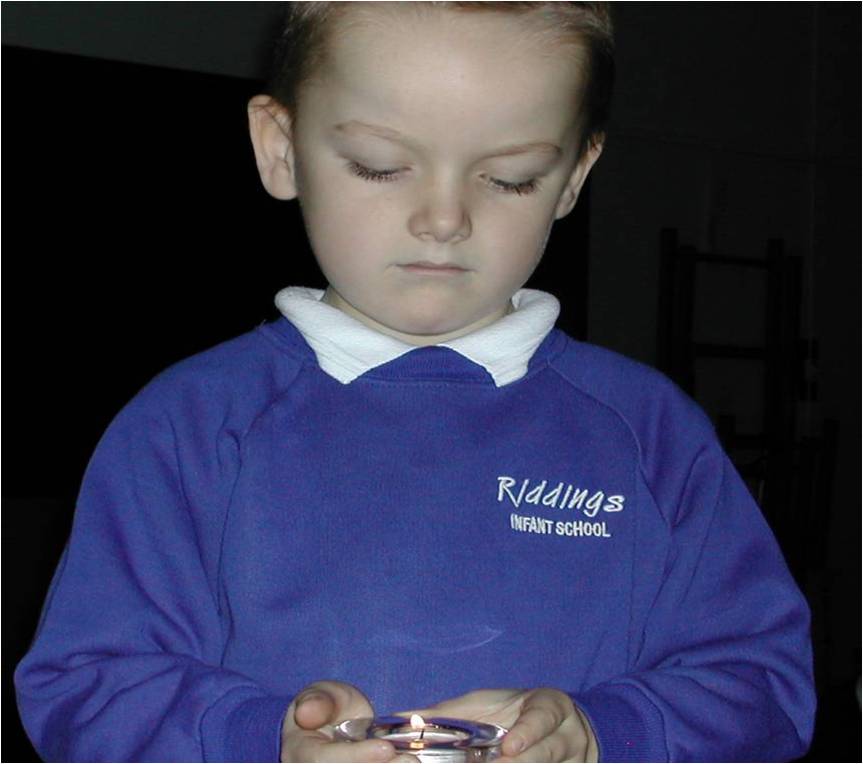
Well, when I first developed the Road to Bethlehem story with Riddings Infants School, in Scunthorpe, in 2004, we felt that 5 minutes silence, stillness and beauty was an important experience for today’s children – and for today’s teachers, too. We wanted the children to learn to read and write – and to be able to be still and reflect, to notice the beauty of the world around them. We wanted the staff to have a moment of stillness to reflect and breath.

So I invited the staff to explore the ancient Christian festival of ‘Advent’ – a time of preparation and waiting – in the run up to Christmas. During the weeks of our Advent Festival there were moments to be still, moments to pause from the rush and the busyness of the Christmas term, moments to think that perhaps there might be more to life than numeracy and literacy, valuable though these are. Waiting is not a priority today – we want everything to be ‘now’ and ‘instant’ – but in the past, people valued the skill of waiting and we wanted the children to experience it for themselves.

And we wanted the children, the pupils of Riddings Infants, to have magical memories of school, of beautiful moments, so that when they become parents, they will feel positive about their own children’s schools, perhaps breaking a cycle of fear and mistrust about education that can be handed down the generations.

Spirituality is a difficult word to define; it is about things of the spirit, the spiritual life. I sometimes say it is to do with thinking about things ‘bigger’ than ourselves. It points us to something beyond ourselves, beyond our own desires and wishes.

This morning it was my privilege to tell, with my fellow #pupil #storytellers, the first part of an ancient story that we will continue over the coming weeks; to sit, with children, in silence and wait for something magical, something spiritual – the birth of a child; to remember the ancient story of the Road to Bethlehem and to look forward, in hope, to the weeks ahead.

We didn’t talk about religion, we shared an ancient story and we enjoyed a moment of silence together.

We practiced ‘spirituality’ rather than worrying about what it meant. And we did a very unfashionable and counter-cultural thing – we waited….

My version of the story, The Road to Bethlehem, was inspired by Young Children and Worship by S. Steward and J. Berryman, 1989, London: Westminster John Knox Press

Character Strengths, Well-being in education

Character strength of the day: love in education

IMG_20141112_164409

What has love got to do with education? Surely, education is all about ‘efficiency’, about ‘what works’ about achieving skills and knowledge? ‘Love’ has nothing to do with it! Only trendy, lefty progressives speak about soft things like ‘love’ in the context of education.

Well, one such ‘trendy, lefty progressive’ was the eminent professor of anatomy and anthropologist Raymond Dart. I first came across Dart on my 1st year physical anthropology reading list at Cambridge University. He discovered and named our hominid ancestor, Australopithecus.  More recently, I have re-discovered him as an advocate and enthusiast for the Alexander Technique, an embodied contemplative practice and educational philosophy I have spent 3 years learning to practice and teach. And according to Dart, love has everything to do with education.

Discussing the acquisition of skills and knowledge in education, Dart wrote in his 1934 lecture, The Significance of Skill, that ‘only love can evoke intelligent concentration on the nature of the movement involved and the will or determination to remember those movements,’ (1934) and he went onto say, ‘Unless our educational methods arouse, maintain and increase enthusiasm, they are worse than useless. They destroy instead of construct,’.

So, for Dart, love is an essential emotion, producing the necessary attention to enable us to learn, ‘Such attention is the outcome only of desire or love of the work,’.

If pupils need ‘love or desire’ to learn, it follows that teachers need to love their subjects in order to teach, to transmit that enthusiasm for learning that will excite young learners and stay with them for the rest of their lives, long after the details or facts that they learned have been forgotten. Sadly, teachers too often work, in the UK and elsewhere in the world, in an atmosphere of fear, mistrust and externally imposed targets and measures. I do not see that as an atmosphere in which love – or any other virtue come to that – can thrive.

Does fear produce good learning? Personally I doubt it. Love produces good learning, love and enjoyment and delight – all those fluffy terms that politicians are so rude about. In my opinion, considering the importance of love in education is not fluffy – it does not mean sacrificing excellence; it is fundamental to the achievement of excellence in any sphere.

wlove frodingham

Character Strengths, Well-being in education

Character Strength of the day: love of learning

Print

This morning I led an assembly at St Paul’s Primary School, Poynton on ‘Love of Learning’ – one of my favorite character strengths and the reason we are in school at all. And I told the story, also a personal favorite, of Anansi and the Pot of Wisdom.

We used our #creativity and our #love of #learning together to create a new prayer, in British Sign Language that incorporated the theme of the assembly. And I left them a VERY long piece of paper to fill up with what they learn this week! Oh, I also added in the strength of #gratitude – because I asked them to remember to THANK their teacher every time they learn something new.

Very excitingly, after the assembly, I had my first meeting with my new project team. Six pupils, years 3, 4 and 5, are going to be my project team and my research team at St Paul’s. Because, as I’ve developed and worked with Celebrating Strengths over the past 10 years it has dawned on me, slowly (yes, I am a SLOW learner!), that this project works best when children are included as collaborators and innovators. This year, for the first time, I am also including them as researchers. Their tasks are to find out how other schools use Celebrating Strengths and what they feel the benefits have been; to help to innovate and adapt it for St Paul’s AND to notice what, if anything changes – what is different because of this project? Together, we will be asking the key question of educational research – does this make learning better?

And, from my perspective, it makes sense to bring research and love of learning together because I think that learning just IS research – thoughtful, observant activity – and research IS learning – finding out something I didn’t know before or clarifying something I sort of half knew.

So, together, my team and I will try out new things, and learn new things – and do research and education together.

Frodingham Infant School Scunthorpe UK

Character Strengths, Well-being in education

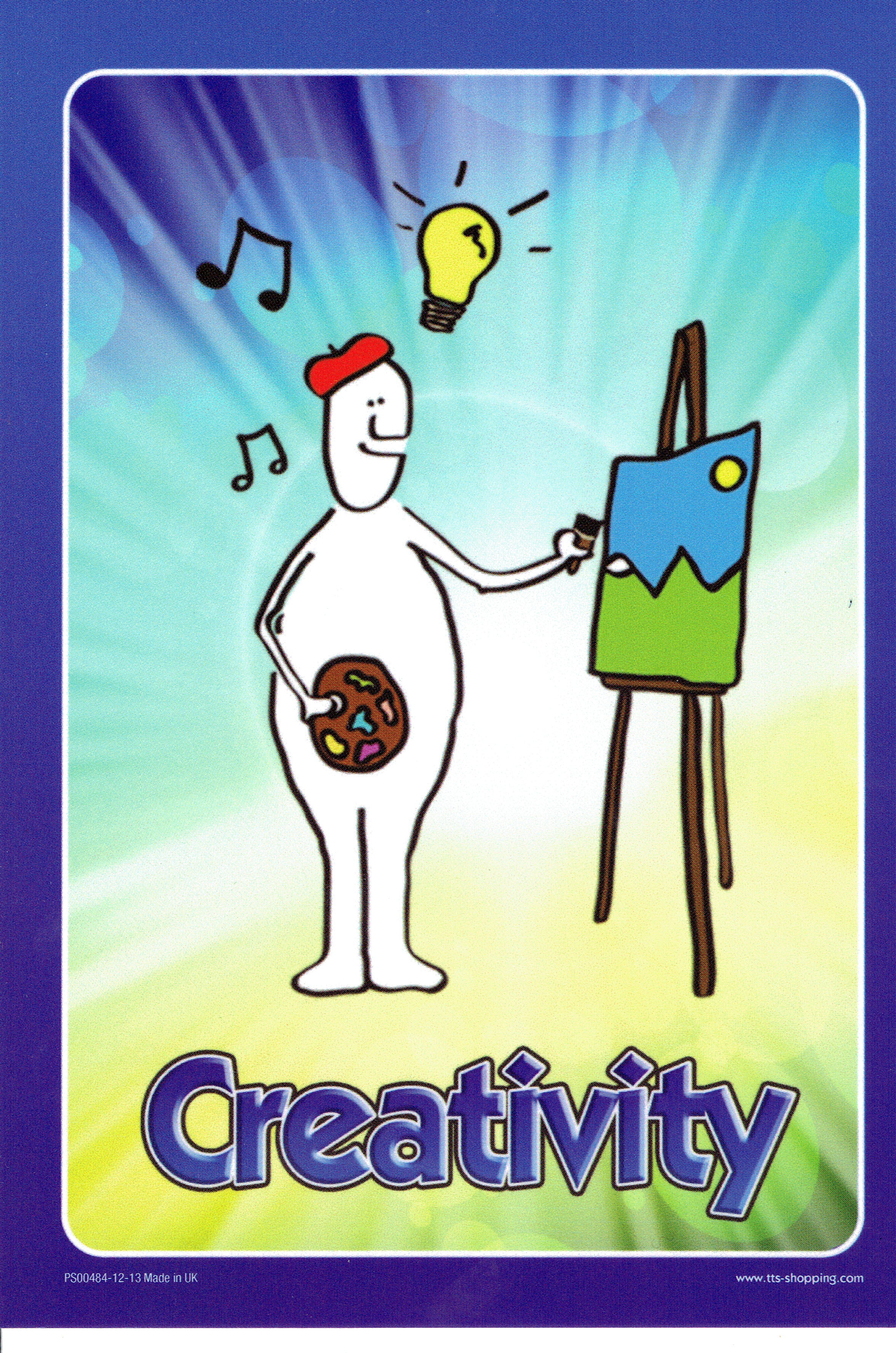
Character Strengths of the Day: Creativity and a Strengths Display Board

CCI20102014

All schools aim to promote good character. Of course they do. While some commentators suggest character education is pointless, personally I would see any education that does not extend to character as pointless – and even dangerous. People with skills, knowledge and no moral compass rarely make the world a better place.

I want children to think about, focus on and debate vigorously what is right and wrong, what makes for a good life, what it is worth living and working for. And to be surrounded by teachers who do the same.

When I trained to teach, we were taught that the environment is an essential teaching tool – another teacher, in fact. To that end, I think it is essential that the environment in which children are educated reflects character as well as the finer points of the correct use of the semi-colon. And by environment I mean what the children can SEE and what they can HEAR. I would like them to hear and talk about concepts like love and kindness, courage and honesty, as well as to hear and discuss algebra and music, literature and history.

So, how do you embed that ephemeral concept, #character, not just into the curriculum, but into the ENVIRONMENT of the school? In other words, how do we put #theory into #practice?

One suggestion is to have a dedicated place in the school environment where #strengths are highlighted and featured in words and pictures – a #Strengths Display Board, if you like. That is what Downshall Primary in Ilford are planning to do.

So, what might a Strengths Display Board look like?

Here’s one suggestion

Strength of the week: Creativity

This week we spotted the following people being CREATIVE – well done them! 

Kevin, Ahmed, Lisa….Mrs Brown

Creativity is one of my favorite strengths and here’s how I use it ….

Jenny: I use it to think of stories to write

Ian: I use it in maths to work out new ways to get the right answer

Mr Brown: I use it to think of new games to teach music

Whole School Strengths Practice – ‘Strange Uses’ (from Character Strengths Assemblies, p. 11) – who’s done it?

Fred, Ginger, Mrs Brown, Jenny the caretaker……

The ‘Whole School Strengths Practice’ idea can be found (shameless resource plug) in here

PS00511_small

The idea is to get EVERYONE in the school thinking about and having a go at the same simple strengths practice and to sign the Strengths Display Board when they’ve done it.

We get more of what we focus on!

I think that the visible and audible presence of #character strengths in schools is not only desirable, but is essential for a school that takes seriously its moral purpose, as well as the goal of getting them to read, write and add up. The Strengths Display Board is one way to do that.

Fox Eades, Jenny 2013 Character Strengths Assemblies. Notts: TTS available here

http://www.tts-group.co.uk/shops/tts/Range/Search?search=character%20strengths

Character Strengths, Well-being in education

Character Strength of the day: teamwork, children as researchers

Teamwork tts

I am feeling quietly excited by my new research team! The children of Downshall Primary in Ilford and St Paul’s Primary School in Poynton are helping me to research Celebrating Strengths – in their schools. Together, we are asking the key educational question – does this help us learn better? Does story telling help us learn better? Does a focus on character strengths help us learn better? Do celebrations and learning to play with and enjoy silence, help us to learn better?

We will be engaging in collaborative research – research together, with pupils.

Whitehead and McNiff define research as thoughtful, reflective activity. This week it has been my pleasure to engage in ‘thoughtful, reflective activity’ with primary school pupils. We played ‘silence games’; we set ‘Strengths Intentions’, using thoughtful movement as part of our thinking activity; we listened to, commented on and coached each other as we tried telling a well known traditional story.

And I am always amazed, and always wonder why I am amazed, at the insight, maturity and observational skills that children bring to their learning. They always do this. Often, we don’t give them the time or opportunity to tell us what they think or notice. I have lots to learn in researching with children – and one of the things I need to learn is to listen more and talk less!!

Some quotes from this week, ‘if I think about teamwork when I’m working it helps me share better’; ‘storytelling helps me be more creative’ ‘I think I’ve listened better today’ ‘I learned from this story to think before I do something’ ‘I really liked the Silence game because some people like being quiet’ (he was 5!!!).

I am quietly excited!

Whitehead, J. & McNiff, J., 2006. Action Research, Living Theory. London : Sage Publications .

Character Strengths, Well-being in education

character strength of the day: creativity

CCI20102014

This morning I told the story of The God Who Sneezed, an ancient Egyptian creation myth (Jenny Fox Eades 2013) at St Paul’s Catholic Primary school in Poynton, as part of an assembly where we thought about ‘creativity’. It is a strange story, a story from a faith tradition we no longer understand. But two things struck me as I told the story. Firstly, there was the fact that the act of creativity emerged against a backdrop of silence – there was ‘nothing to hear but the slow, sloosh of the primeval river flowing past’. Creativity needs stillness, it needs space and moments of silence for reflection, what I call ‘sinking in time’ – as well as noise and buzz, discussion and the exchange of ideas.

The second thing that struck me was the playfulness, or humour of the story – the god, Atum, sneezes creation out of its nose! And creativity just IS playfulness – playing with ideas, playing with materials, playing with words or musical notes or numbers. Too much seriousness, too much focus on ‘the right answer’ or ‘getting it right’, on deadlines and rules and regulations, is a sure way to stifle creativity.

The god in the story needed stillness and silence and playfulness to create – and so do we.

And during the assembly there were moments of complete stillness and silence – yes, children can and do enjoy silence! And there was time to be noisy, to play with ideas and to chat and think aloud.

The children and teachers at St Paul’s said that they thought creativity involved ‘making things’, ‘making ideas’, ‘originality or uniqueness’, ‘thinking outside the box’ and ‘linking’. One person raised the idea that you could be creative with friendships and relationships – I was surprised at first but her thought is growing on me!

I asked them to ‘be creative’ in the week ahead because psychologists tell us that the simple instruction, ‘be creative’ does actually produce a rise in creativity – perhaps because we need permission to be playful and not to try to get it ‘right’ first time!

When I go back in on Thursday, I shall ask them how they have got on. Watch this space………..

Fox Eades, Jenny 2013 Character Strengths Assemblies. Kirkby-in-Ashfield: TTS

http://www.tts-group.co.uk/shops/tts/products/pd3650728/

Character Strengths, Well-being in education

Character strength of the day: hope – the story of Celebrating Strengths

Hope is a forward looking virtue and one that is at the heart of teaching and learning – we teach for the future, we pass on wisdom (we hope) and knowledge and culture – good things – to the next generation.

CCI15102014

So it is something of a paradox that a good way to BUILD hope is to reflect on the past, to tell the story of where we have come from, of past hopes that came true, past struggles survived. So this post is my reflection on where Celebrating Strengths has come from, the story of how it came into being. It is also a way of building my own personal hope that it might continue to grow and spread and do a little bit of good in the world of education and in the lives of children and teachers…

Starting with storytelling 

With a Masters Degree in Child and Adolescent Mental Health from The Tavistock Clinic and UEL, and a background in special needs teaching, I wrote an article, in 2003, on the importance of traditional tales, legends, myths and fairy tales in education for a teaching magazine called Five to Seven (published by http://www.markallengroup.com). One phone call later and I was delivering a training day to Riddings Infant School in Scunthorpe on using fairy tales, and reviving the ancient teaching technique of story telling.

I focused NOT on using stories to teach spelling or grammar or reading but on using them to nurture the well-being – the mental health – of children and I emphasized the importance of fostering the art of story telling in schools. Story telling is an ancient and powerful teaching technique, creative, nurturing, using the whole teacher and engaging the whole child.  Oral story telling can enhance the ability of ancient and powerful stories, like myths and fairy tales, to help humans make sense of the world and of themselves, and to pass on wisdom and values from generation to generation.

Adding reflection and celebration

As well as storytelling, another way that human societies have fostered well-being and passed on values to the next generation, has been to take time out of the daily routine to reflect and to celebrate. So at Riddings, we decided to create a yearly cycle of celebrations – festivals that allowed us time to reflect, to tell stories and to celebrate just being a community together. We first developed an Advent festival, that became a Festival of Lights, with the highlight being the Spiral of Lights #SpiralofLights. Westcliff Primary Scunthorpe UK This has now become a valued tradition in schools  in Scunthorpe and elsewhere in the UK.

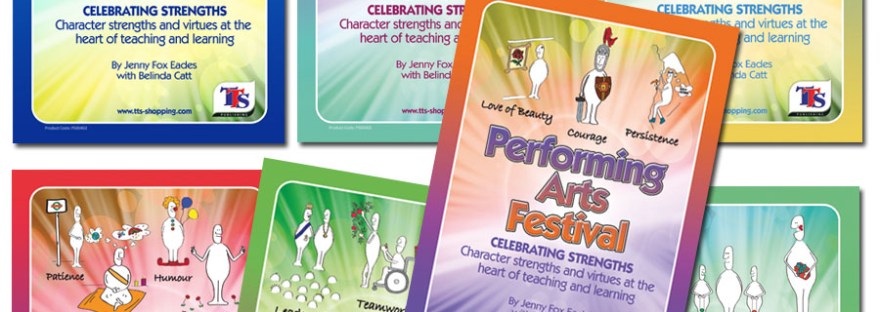
Other festivals we developed were a Beginnings Festival, an Endings Festival and festivals that celebrated the local and global community and the performing arts. The ideas and stories behind these festivals were later published by TTS as a series of 7 festival books

PS00402_1_large

http://www.tts-group.co.uk/shops/tts/Products/PD3029641/Character-Strengths-Festival-Books/?rguid=ff14c56d-720e-417f-bffa-d6518492f196

Character Strengths – the final ingredient

The last ingredient we added to the mix, the staff and pupils of Riddings Infants, (and by now also Leys Farm Junior School, Riddings Juniors and Enderby Road Infants) and I, was the character strengths and virtues of Chris Peterson and Martin Seligman (2004).

We loved the words, the children loved the words. Parents began to comment when their 5 year olds came home talking about persistence or gratitude. We added signs from British Sign Language to the words, we added the words to displays and linked them to the stories and festivals we were already using – and Celebrating Strengths was born!

strengths displayAt first the schools and I made our own resources, I wrote versions of over 60 traditional stories and sent them to the schools, we created pictures and certificates to embed the character strengths in the environment and language of the schools. Then, a lovely young Danish teacher and artist, Laura Linder, drew me some cartoons of all of the strengths and, with some added ideas from the pupils of Bollington Cross Primary School, the beautiful cartoons now published by TTS were born.

PrintI am proud of Celebrating Strengths. It has developed over the past 10 years. There are several books that describe the ideas behind it

csindex

It has been used in Denmark and translated into Danish! It is known and used by schools in Australia, too.

But what I am MOST proud of is the fact that it combines the wisdom of so many people. As this post makes clear, no one person created Celebrating Strengths. It was, very genuinely a collaborative project – the staff and children of Riddings Infants, Leys Farm, Riddings Juniors, Enderby Road …my lovely colleague Belinda Catt who then introduced it to Frodingham Infants School …the staff and children of Bollington Cross Primary…the work of Peterson and Seligman, the beautiful cartoons of Laura Linder, my superb colleagues at TTS, my Australian colleagues at schools like Geelong Grammar, Burgmann and St Michael’s Anglican Schools and the Berry Street Institute Schools, who adapt it for their own very different cultural climate…the nameless creators of the stories we tell…The Selkie Wife, Red Riding Hood, St Werburgh and the Geese….

And now it is my pleasure and privilege to be working with some more amazing schools – and pupils and teachers, who are changing and developing it further – Thomas Gray Primary in Bootle, Downshall Primary in Ilford, St Paul’s Poynton. These UK schools are using it as a practical and positive way of implementing #PSHE, personal, social and health education and #SCSM spiritual, cultural, social and moral education. I am researching it and developing it further for my own PhD.

And the developments and the changes and the bright ideas we come up with, will, hopefully, (because hope is where this story started), be written about here in this blog and will help, in a little way, to foster education, to pass on good things, like love and kindness, stories and silence, to the next generation. I hope so, anyway.

Peterson, C. & Seligman, M. E. P., 2004. Character strengths and virtues: A classification and handbook. Washington DC: American Psychological Association.